
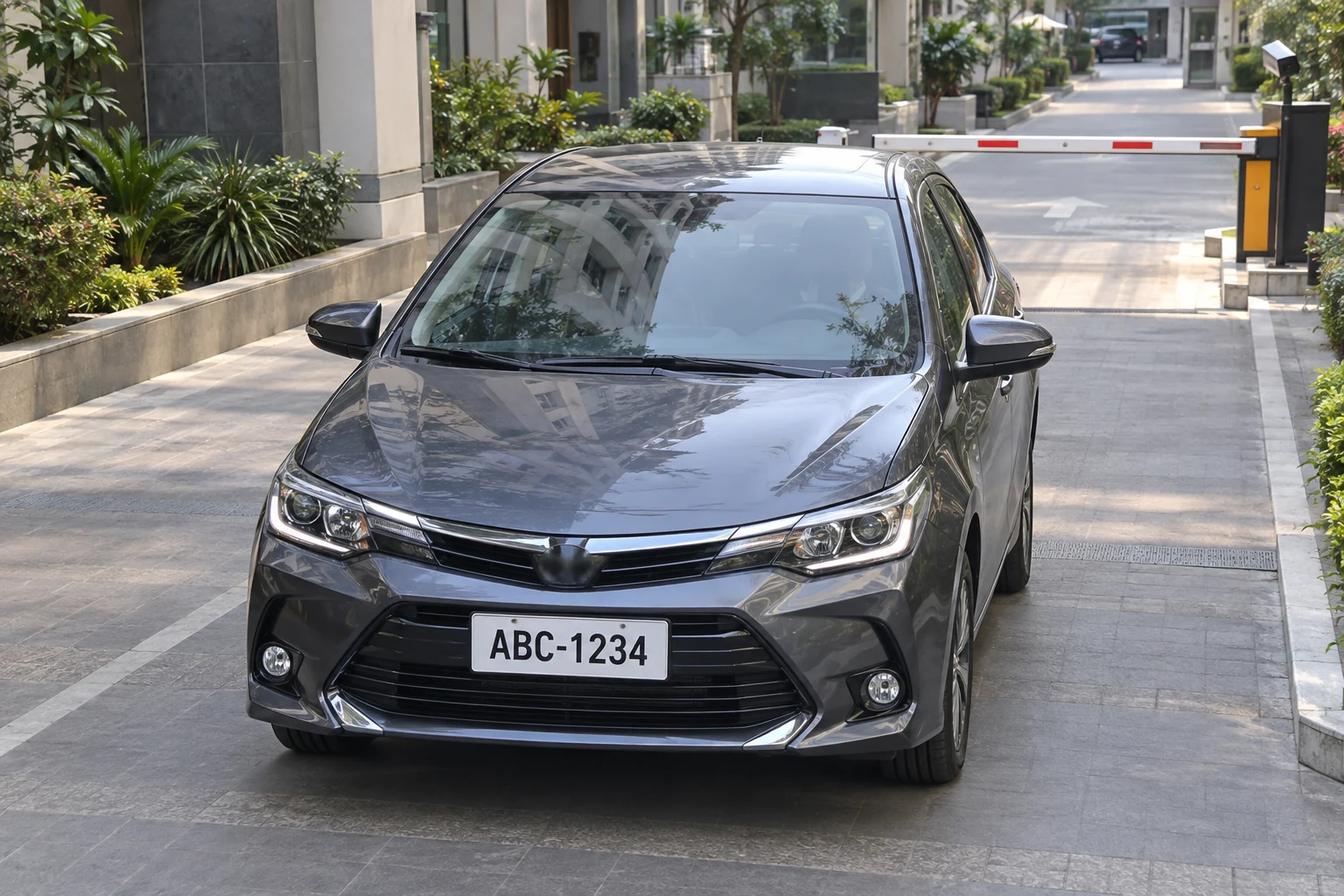
Vehicle Detection
Is a supported vehicle in view?
Vehicle DetectedRecognizes a configured vehicle category.


NABIK SMART SURVEILLANCE
Recognize supported registration plate formats, review vehicle events, and match configured known plates using compatible cameras and AI processing.
Bengali-script plate recognition requires separate compatibility verification.
UNDERSTAND THE DIFFERENCE
Vehicle detection identifies a car or another supported vehicle. LPR attempts to locate and read its plate when enough usable detail is available.
Is a supported vehicle in view?
Vehicle DetectedRecognizes a configured vehicle category.
Is the registration plate visible?
Plate LocatedLocates a suitable plate region in the configured pipeline.
Can the plate characters be read?
Plate Text RecognizedA compatible OCR model attempts to extract visible characters.
Vehicle detection does not guarantee a visible or readable plate. Camera quality, plate position, motion, lighting, character script, and OCR compatibility affect recognition. Visuals use a fictional Latin plate.
MORE CONTEXT FOR VEHICLE EVENTS
For a supported plate format, recognized characters help authorized users distinguish and review vehicle activity. No owner lookup or government registration verification is implied.
Attempt to extract registration characters using compatible OCR models and suitable images.
Compare recognized registration information with configured known-plate entries.
Examine relevant footage alongside available plate-recognition details.
Use supported filters to find events associated with recognized registration information.
FROM CAMERA TO RECOGNITION RESULT
A compatible camera captures a vehicle or clear plate.
Locate the vehicle or plate in the configured camera image.
A supported OCR model reads the visible plate characters.
When enabled, compare the text against configured entries.
Review recognition details alongside the original recording.
The detection pipeline varies by configuration. Standard vehicle-based LPR, native plate-detection models, and dedicated plate-camera workflows do not all use the same processing steps.
RECOGNIZE CONFIGURED VEHICLE PLATES
Administrators can configure known registration entries and useful labels. When supported recognition matches an entry, its label can accompany the vehicle event.
A known match does not prove ownership, driver identity, or entry permission. Plates may be duplicated, altered, obscured, or misread. An unmatched plate is not a threat indicator.
FROM DETECTION TO INVESTIGATION
Where LPR results are available, supported review tools can help locate vehicle events using recognized plate information.
Verify recognized text against retained original footage before relying on it. This demo filters fictional records and does not process live cameras.
3 sample events
See available plate information alongside camera-event details.
Narrow events with supported registration filters.
Open retained recordings to verify the text and surrounding activity.
Only retained footage and results actually captured remain available. Missing or misread characters cannot be treated as reliable records.
VEHICLE MONITORING FOR DIFFERENT PROPERTIES
These potential applications require suitable placement, supported registration formats, lawful monitoring, and compatible AI processing. Bengali-script compatibility remains subject to testing.
Add supported registration information to vehicle events, including activity associated with configured resident vehicles.
Help authorized teams review known-plate activity around designated entrances.
Review available plate information at designated vehicle access areas.
Associate supported plate information with recorded logistics entrance events.
Narrow recorded vehicle activity using available recognized registration information.
Review supported registration information at designated entry and exit locations.
Automated parking entry, billing, and barrier-gate control are not built-in promises of plate recognition.
THE RIGHT CAMERA MAKES A DIFFERENCE
A regular camera may capture readable plates in suitable conditions. Wide-area monitoring often lacks the detail needed for OCR; a dedicated plate camera can help in demanding environments.
Wide-area monitoring · ConceptBest for relatively close plates, suitable entry views, sufficient resolution, and clear lighting.
Benefit: Potentially reuse camera infrastructure.
Limitation: Wide angles, distance, movement, and glare can prevent readable captures.
Focused plate capture · ConceptBest for narrow lanes, focused entrance monitoring, and more demanding lighting or vehicle movement.
Benefit: Position and configure the camera specifically for plate capture.
Limitation: Additional hardware may be needed. OCR script compatibility still requires validation.
Not sure your cameras are suitable? Request an assessment before buying hardware →
LOCAL PLATE DETECTION & OCR
Read characters → Match entries → Review
SUPPORTED AI PROCESSING
With suitable hardware, compatible streams, and an appropriate OCR model, supported plate detection and recognition can process images locally.
Documented minimum: 4 GB RAM and an AVX + AVX2-capable CPU. The complete workload may need more capacity.
Supported streams must provide enough image detail for readable registration characters.
The model must support the intended plate character set, layout, and format.
Internet is initially needed for model downloads. Supported cached models can then run locally.
Documented models cover Latin and, depending on the model, Chinese characters. Bengali-script support has not been established. Format-matching rules or image enhancement cannot fix an unsupported OCR script.
A suitable Bengali OCR solution and the complete recognition pipeline must be validated before promising reliable local plate recognition.
WHAT DETERMINES RECOGNITION QUALITY?
Successful recognition requires a sufficiently visible plate and a model that supports its characters.
Severe side angles make characters difficult to read.
Plates need sufficient detail in the camera’s detection stream.
Moving vehicles can produce blurred characters.
Glare, reflections, darkness, and exposure affect readability.
The model must support the plate’s characters, numerals, and layout.
Even suitable systems can misread, partially read, or miss plates. Results are not conclusive proof of vehicle identity or authorization.
MORE INFORMATION FROM VEHICLE EVENTS
Specialized ANPR cameras and commercial CCTV systems offer similar capabilities. Nabik integrates supported LPR with configurable AI surveillance and compatible streams; higher accuracy than dedicated systems is not implied.
RESPONSIBLE VEHICLE MONITORING
Registration numbers, recordings, and activity history may be personal data or identify people in context. Establish lawful purposes, manage access, provide required notices, and apply appropriate retention.
Prabotics Labs and customers must meet applicable obligations according to their respective roles. Using Nabik does not automatically provide legal compliance.
Use registration monitoring only with the necessary authority and legal basis.
Limit registration information and related recordings to authorized staff.
Keep event information only for legitimate, necessary periods under applicable policies.
Check original recordings before making consequential decisions based on plate matches.
YOUR QUESTIONS, ANSWERED
Everything you need to know about AI License Plate Recognition.
AI License Plate Recognition uses computer vision and optical character recognition to detect and read supported registration plate characters from camera footage.
The standard OCR documentation does not establish support for Bengali-script registration plates. Reliable Bangladeshi plate recognition requires additional compatibility testing or a suitable Bengali OCR implementation. Contact us to discuss the intended plate format before purchase.
Supported LPR configurations can match recognized plate text against predefined known-plate entries and attach a configured label to the associated event.
It may work when cameras capture sufficiently clear images at night. Headlight glare, motion blur, darkness, exposure, and camera positioning can reduce performance.
The underlying local models require internet access for initial downloads. Once installed and cached, supported local recognition processing can operate without continuous internet access.
License plate recognition alone does not provide complete automated gate control. Physical gate integration requires compatible equipment, additional automation, appropriate security safeguards, and a separately tested configuration. It is not included by default.
Availability depends on the AI Box model, installed software, camera setup, selected plan, and supported OCR configuration. Confirm the commercial scope before purchasing.
Requirements depend on the location, purpose, applicable data protection rules, property rights, notice requirements, and other circumstances. Customers must ensure their deployment is lawful and appropriately controlled.
Vehicle detection identifies a vehicle in a camera view. License plate recognition attempts to locate and read its registration plate. Detecting a vehicle does not guarantee successful recognition of its plate.
No. Recognition requires a clear plate image, supported characters, suitable camera placement, and correct configuration. Some plates may be unreadable or recognized incorrectly.
Where supported recognition results are available, the surveillance interface can provide recognized-plate filtering and relevant event details.
Possibly. Compatible cameras may be suitable when their video streams clearly capture the registration characters. Some locations may need dedicated LPR cameras.
It requires suitable processing resources, including the documented minimum of 4 GB RAM and an AVX/AVX2-compatible CPU. Actual capacity and performance depend on the complete configuration.
No. LPR reads supported visible characters and may match configured known labels. It does not independently access government vehicle-owner databases or verify the driver’s identity.
Recognition results can contain errors. Important decisions should be based on manual verification of the original footage and other appropriate information.
SMARTER VEHICLE MONITORING STARTS HERE
Discover whether your cameras and intended registration formats can support AI-powered License Plate Recognition with Nabik.